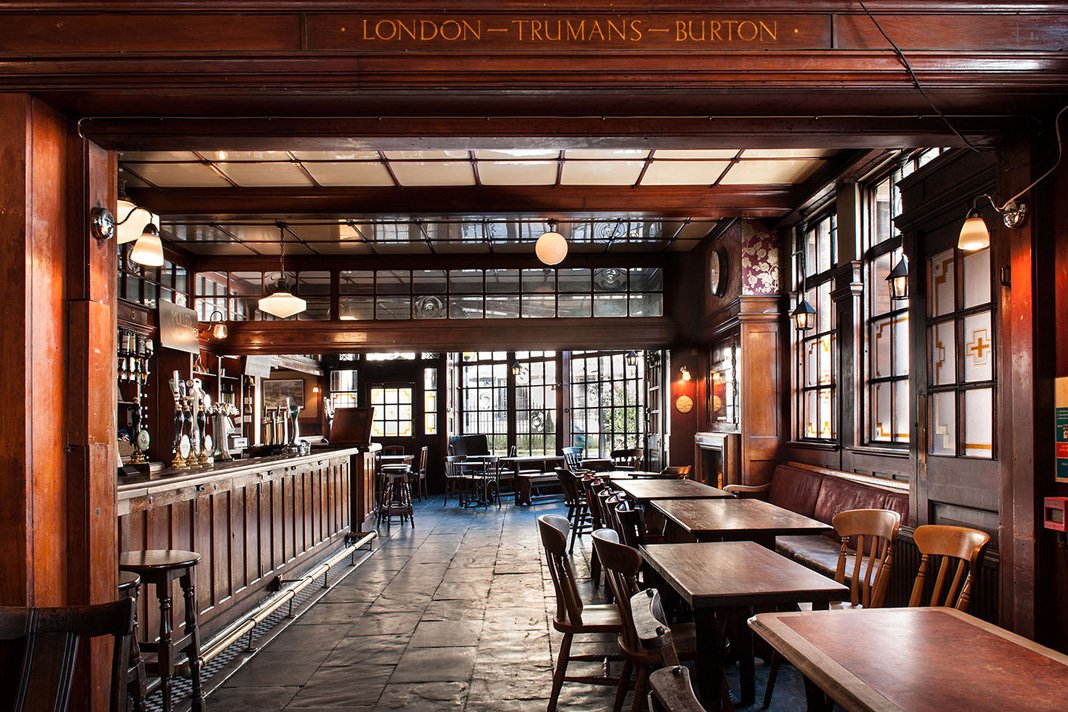
THOUGHT EXPERIMENTS IN PUBS
BATTERSEA
MAKING

1 THE JOURNEY
Pedro has just finished the final edits on his manuscript. He sits back in his chair and breathes a long sigh. He can’t believe it’s finally done.
The sensation is strange and not what he expected. He can’t describe it as positive.
Pedro has a sense of relief. Relief that his fears about failing or having a breakdown while writing didn’t come to pass.
This feeling of relief makes Pedro feel sad. It reveals just how difficult he’s found the past year. This process of writing a book has been exactly as everyone told him it would be: like agony.
Staring blankly at his computer, Pedro wonders “was it even worth it?” His eyes well up a little.
He quickly pushes this thought away and tries to focus on other emotions: satisfaction, pride, etc.
But the little voice of doubt resurfaces every so often over the following days and Pedro keeps catching himself wondering what else he could have done with the time he spent writing his book.
—
A few days later, over coffee with a friend, Pedro confesses these uncomfortable feelings.
He asks:
“Have I been stupid to not use AI? I could have finished ages ago, and the book might even be better. I could have been on holiday instead of sitting in that little room writing. I guess it was just my stubborn pride that made me want to do it all myself, without relying on anyone or anything else. I wanted to achieve it. The problem is, I’m not sure the achievement is really worth the misery that went into it.”
Pedro’s friend says:
“Well I don’t know either, but I heard this quote by John Ruskin the other day and I think it's very wise. It goes like this:
“The highest reward for a man's toil is not what he gets for it but what he becomes by it.”(Ruskin, as cited in Templeton, 2024)
Pedro’s friend goes on:
“You’ve become someone who can write a book…someone who can complete a challenging project all by themselves…someone who can endure discomfort and avoid distraction. Does that not feel worth it?”
QUESTIONS TO CONSIDER:
Was Pedro’s journey worth it?
If you could snap your fingers and instantly achieve your 3 biggest imaginable achievements, would you? What might you lose if you did this?
What do you think of the Ruskin quote?
How important is the journey compared with the outcome?
Are there any experiences that you’ve had that have been horrible, but ultimately enriching? Were they ‘worth it’?
SOURCES: BA, THOUGHT EXPERIMENTS IN PUBS Group Member - read more of her writing here.
Templeton Foundation. (2024). Craftwork as soulwork. https://www.templeton.org/news/craftwork-as-soulwork
2 TINY SPHERES OF INFLUENCE
Pam is sitting on the floor.
She’s wearing her swimming costume over her pyjama bottoms and holding a paintbrush.
Pam is focussed. She is painting a jam jar green. She hums to herself as she works.
Pam is 4 years old and, as her father often says, “in a world of her own”.
Fast forward 30 years:
Pam is sitting at her desk, looking at her computer. Her neck hurts. She shifts in her chair every few minutes, but rarely looks up from her screen. When she does look away from her laptop, it is to check her phone, which rests on the desktop next to her.
Pam is wearing tracksuit bottoms and a polar neck. She wears variations of this combination pretty much every day in Winter. It’s comfortable and easy and one of the perks of working from home.
Pam’s phone pings. Her dad has sent her a photo.
Opening it, she sees a four year old version of herself, sitting on the floor painting a jam jar green.
Her dad’s accompanying message says:
“It’s time you started making things again Pam, unlocking that creative spirit within!”
Underneath is a URL to a TED Talk about Creativity. Pam clicks on it.
The woman on stage immediately gives her the ick. She’s wearing a long cape type thing and talking in a very animated fashion. She says:
“The world is literally and figuratively on fire, and I’m going to tell you that you need to make art.” (McNee, 2025)
This sounds just like her father’s creative propaganda. He has a woodworking business and is constantly going on about the value of making stuff for mental heatlh.
But after a few minutes watching, Pam is gripped by this woman’s message.
She jots down a few quotes from the talk:
“When I write my novels, I’m the god of my own little realm.”
“We are a culture of consumption and we have forgotten how to make”
“[Creativity] needs to be something you think about when it comes to how you look after yourself.” (McNee, 2025)
While the video is still playing, Pam starts digging around amongst the cardboard boxes under her desk.
At the very back she finds a dusty tin labelled in sharpie: “PAM PAINTS”. She takes them out. They remind her of her childhood.
She experimentally dips a brush into green paint and starts painting over a work document on the desk in front of her. It feels good.
QUESTIONS TO CONSIDER:
What do you imagine happened to Pam between the age 4 and 34?
Are children more creative than adults? If so, why? Is this natural?
How important is it to ‘make stuff’?
What do you think of the statement: “[Creativity] needs to be something you think about when it comes to how you look after yourself.”
What counts as ‘creative making’?
How do you think spending more time ‘making’ than ‘consuming’ would affect humans?
SOURCES: BA, THOUGHT EXPERIMENTS IN PUBS Group Member - read more of her writing here.
McNee, A. (2025, April 25). The case for making art when the world is on fire [Video]. YouTube. https://www.youtube.com/watch?v=2XZ9z6OewR0
3 MAKE YOURSELF
Kirsty takes her 15 year old daughter, Sheila, to a personal development talk. They have a pleasant evening. On the journey home they chat about what they found inspiring. They both agree that the key quote that stood out to them was:
“What we do every day makes us who we are… so we should think about what it is we’re doing.”
The next morning, Kirsty asks Sheila to help her tidy the kitchen.
Sheila replies:
“I’ve got to go for a walk, mum, I’m kindnessmaxxing.”
Kirsty says:
“You’re what?”
Sheila says:
“Kindnessmaxxing. It’s exactly like that quote from the talk yesterday. Look it up.”
Sheila leaves the room.
Kirsty feels a little irritated. She googles:
“What is kindnessmaxxing?”
Google’s AI overview says:
“Kindnessmaxxing is a trend focused on intentionally maximizing compassionate behavior, empathy, and positive interactions to create a ripple effect of well-being in your community. Actionable steps include engaging in morning walks without digital distractions, practicing consistent empathy regardless of background, and integrating whimsy or "messy" authenticity into your social presence. It serves as a counter-culture movement against negativity, promoting harmony for humans and animals alike.”
Now Kirsty feels really irritated. How is going for a morning walk and posting ‘messy whimsical’ pictures on social media kind? Wouldn’t helping her mother tidy the kitchen be kinder? She phones her friend Maya and tells her the whole story.
Maya replies:
“I hate to say this, Kirsty, but consider yourself lucky. My son, Krish, is into Looksmaxxing. He’s spending his whole time trying to make himself into some sort of masculine ideal because he’s been convinced by online influencers that that is the ‘cheat code to success’ in life.
These influencers are prejudiced in every way imaginable and are having a toxic effect on young people, just watch that Louis Theroux documentary about The Manosphere if you want to know more about it. [she sighs]
Honestly, I think society was better when people weren’t trying to optimise themselves so much. But if I had to pick, I’d choose Kindnessmaxxing over Looksmaxxing anyday.”
QUESTIONS TO CONSIDER:
What do you think of the original quote: “What we do every day makes us who we are… so we should think about what it is we’re doing.”?
What about Sheila’s interpretation of this quote (i.e. the decision to be a kindnessmaxxer)?
In response to ‘looksmaxxing’ and ‘kindnessmaxxing’, Maya says “Honestly, I think society was better when people weren’t trying to optimise themselves so much.” What do you think?
Why do you think trends like this have become popular?
How else might you interpret that original quote?
SOURCES:
BA, THOUGHT EXPERIMENTS IN PUBS Group Member - read more of her writing here.
Google’s AI assistant on ‘Kindnessmaxxing’ and ‘Looksmaxxing’
Lets be friends on Instagram: @thoughtexperimentsinpubs
Our newsletter (and more) can be found here:
FEEDBACK
(Messages are anonymous unless you include your name/contact details)
Help me to write more THOUGHT EXPERIMENTS and arrange more meetups by…
Thank you, your support means a lot :-)