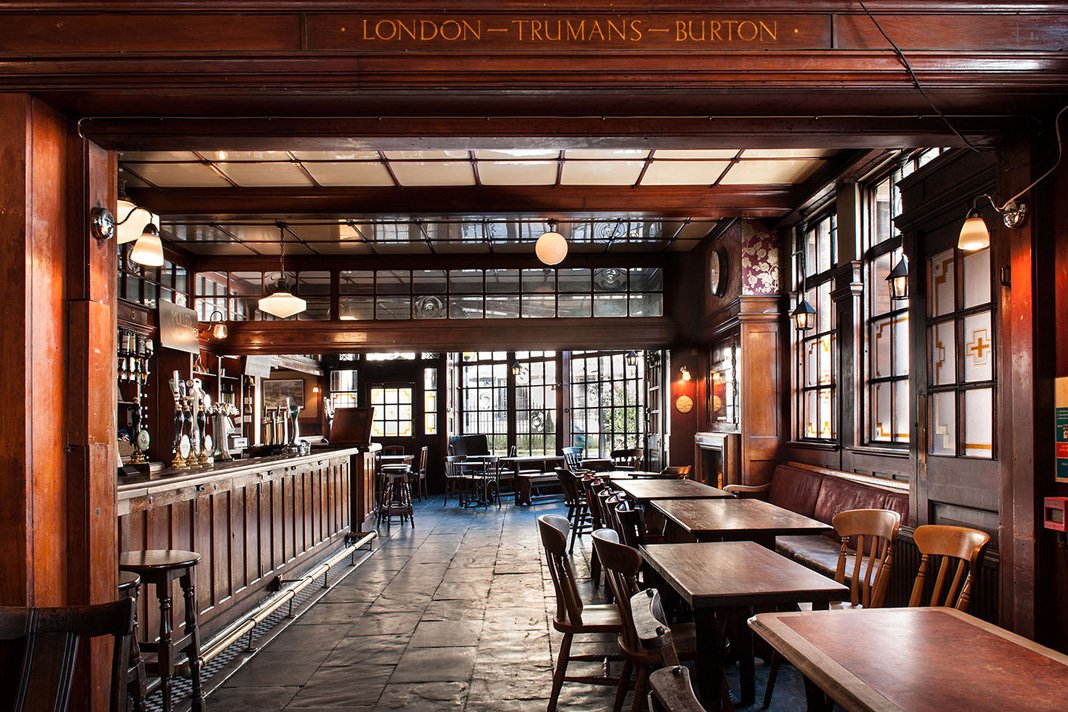
THOUGHT EXPERIMENTS IN PUBS
PORTOBELLO
REVIVAL

1 PROMISE OR DOOM?
Linda and Mia share a flat in Walthamstow.
It’s bright and spacious and although it looks nothing like Monica and Rachel’s apartment in Friends, it has some of the same feeling. It is the hub of their friendship group and there is always someone around.
Today, Devi is lounging on the sofa drinking an iced coffee, while Linda opens the post at the kitchen table, and Mia waters the plants.
Linda:
“Oh wow! Aamon and Jack are renewing their wedding vows. We’re invited.”
Devi:
“Any excuse for a party!”
Mia:
“Well it's a good excuse! They’ve been married for way longer than anyone else we know. Since they were 19 right? So over 10 years!”
Linda:
“Maybe it's more than just an excuse for a party, maybe they want to start a new chapter. That famous therapist, Esther Perell, says you have 4 marriages, even if they’re all to the same person. Maybe Aamon and Jack want to mark the beginning of a new chapter. I think it's a healthy step forwards into a more intentional future.”
Devi:
“Or they’re doing it as a last ditch attempt to breathe fresh life into a stale relationship with a party! I always think it's a bit of a warning sign for a relationship when people decide to ‘renew’, ‘refresh’, or ‘spice it up’! I reckon they’ll get divorced before long.”
Mia:
“‘Breathing fresh life’ and ‘starting a new chapter’ sound like the same thing to me, it's just that you're an optimist, Linda, and you’re a pessimist, Devi. I wonder if there’s an answer, whether anyone has done a study on this kind of thing: Does renewing your vows means you’re more likely to have a successful relationship going forwards, or is it a warning sign that things are doomed… and I guess more broadly, is setting intentions with ritual effective?”
Linda:
“I know an aspiring PhD student who might be interested in that as a topic to study. I might suggest it.”
Devi:
“Honestly, who would fund that? If that gets funded, everything they say about academia in ivory towers is right.”
QUESTIONS TO CONSIDER:
How is a renewal/revival similar to a ‘fresh start’? How is it different?
How important are rituals of renewal?
Whose perspective resonates with you more? Linda or Devi?
Do you agree with Esther Perel’s theory that everyone has 4 marriages, even if they’re all to the same person?
What do you think of the idea of renewing wedding vows after 10 years?
What do you think this PhD would reveal (if it got funded)?
Who might fund it? And would they be sensible to?
SOURCES:
BA, THOUGHT EXPERIMENTS IN PUBS Group Member. You can read more of her writing here.
Perel, E. (2006). Mating in captivity: Reconciling the erotic and the domestic. HarperCollins.
2 MAY DAY
Billy is rejoicing. It is May Day. Warmth and light are returning after a long cold Winter and he wants to celebrate with music and dancing and being outside.
He rings a few friends to arrange a gathering. Their reactions:
Paulette:
“What is May Day? Isn’t today just the first of May? I didn’t realise it was a holiday. But sure, I’m up for going out tonight. It’s a long weekend, which is always cause for celebration.”
Magda:
“I’ve got so much work to do Billy, I’m sorry, I’ll be glued to my desk till late tonight. My eyes are going square. Shall we do something in a few weeks?”
Eric:
“It's too hot man! You know I’m a Winter person. I’ll be staying home today. Probably get cosy with a cup of tea and a good book.”
Billy is astounded at his friends’ lack of enthusiasm for what feels like a significant day. He’s done some research on May Day and discovered that its origins stem from ancient traditions.
In Ancient Rome, the Florilalia or “Festival of Flora”, celebrated the goddess of flowers, fertility and Spring.
In the Gaelic world, Beltane market the opening of pastures for Spring and Summer grazing and involved adorning doors and windows with flowers, and lots of bonfires Chu, J. (n.d.).
Billy wonders whether these traditions have died in his generation. His friends seem so oblivious to the seasonal change.
But then Billy has had a rather different year to them…
A year ago, Billy heard that central heating only became ‘common’ in the UK in the 1970s (Platman, 2020). Having grown up with central heating, he wanted to see what it would be like not to have it, so he decided to go without for a year. Winter was tough. But he’s never been more excited for Spring. The joy he’s experiencing today feels worth it.
He wonders if our technological gains have also meant we’ve lost something as a society.
Billy recently heard that having electricity in your home has only been ‘common’ in the UK for 100 years (Science Museum Group, n.d.). He decides that this year, he’ll do another experiment and forgo electricity for at least one day a week. He knows this is a custom in Orthodox Judaism (no electricity on Saturdays) and wonders what he might gain from it.
Billy contemplates other traditions of deprivation and celebration. Maybe next year he should fast for Ramadan. And maybe he should organise a big May Day rave.
QUESTIONS TO CONSIDER:
Billy feels more connected to ancient traditions and festivals because he has deprived himself of modern technology. Is this a valuable thing to do?
How important does ‘May Day’ feel to you?
How important is deprivation for appreciation?
What do you think the logic behind the Orthodox Jewish tradition of not using electricity for one day a week is?
Do fasting traditions operate on similar principles?
Is Billy silly? Or a bit enlightened?
SOURCES:
BA, THOUGHT EXPERIMENTS IN PUBS Group Member. You can read more of her writing here.
Chu, J. (n.d.). The history of May Day. National Trust. https://www.nationaltrust.org.uk/discover/history/the-history-of-may-day
Platman, L. (2020). How central heating changed our lives. Museum of the Home.
Science Museum Group. (n.d.). Electrifying: The story of lighting our homes. Science Museum.
3 REVIVED
Helen was revived.
That’s how she’s choosing to think about it. Resuscitated sounds too scary and medical. She considered the word ‘reborn’, but it felt a bit dramatic and also brought to mind images of both religion and labour wards and neither felt like they captured Helen’s experience.
Technically, Helen was dead for 3 minutes. Her heart stopped.
She doesn’t like to think about the circumstances of her “death” much, but the actual experience of being dead has definitely changed her life for the better…at least in her opinion.
Since dying, and being revived, Helen feels like the world is a lot more vivid.
It occurs to her that the word vivid must be connected to the word revived. Both are derived from ‘viv-’, meaning life or alive. Coincidentally, she’s been listening to Mark Anthony’s most famous song, Vivir mi Vida, on a loop since her revival. Maybe its not a coincidence: Vivir mi Vida means “Live my Life” in English.
Helen thinks that she feels more fully alive because of her proximity to death. It feels crazy, but she’s recently been thinking that a lot of her friends could do with a near death experience in order to be ‘revived’.
She wants to create a piece of artwork to communicate her experience, but she’s never done much art before.
She tells you all this and asks if you have any thoughts.
QUESTIONS TO CONSIDER:
What would you say to Helen?
Why does death sometimes make us feel more alive?
Could it be therapeutic to have a near death experience?
If you could opt in to having a near death experience, knowing that you would survive, would you?
Can you think of any artistic ways for Helen to express her experience?
SOURCE: BA, THOUGHT EXPERIMENTS IN PUBS Group Member. You can read more of her writing here.
Please follow us on Instagram :-) @thoughtexperimentsinpubs
Our newsletter (and more):
FEEDBACK
(Messages are anonymous unless you include your name/contact details)
If you’d like to support me to write more thought experiments and arrange more meetups, please…
Thank you, your support means a lot :-)