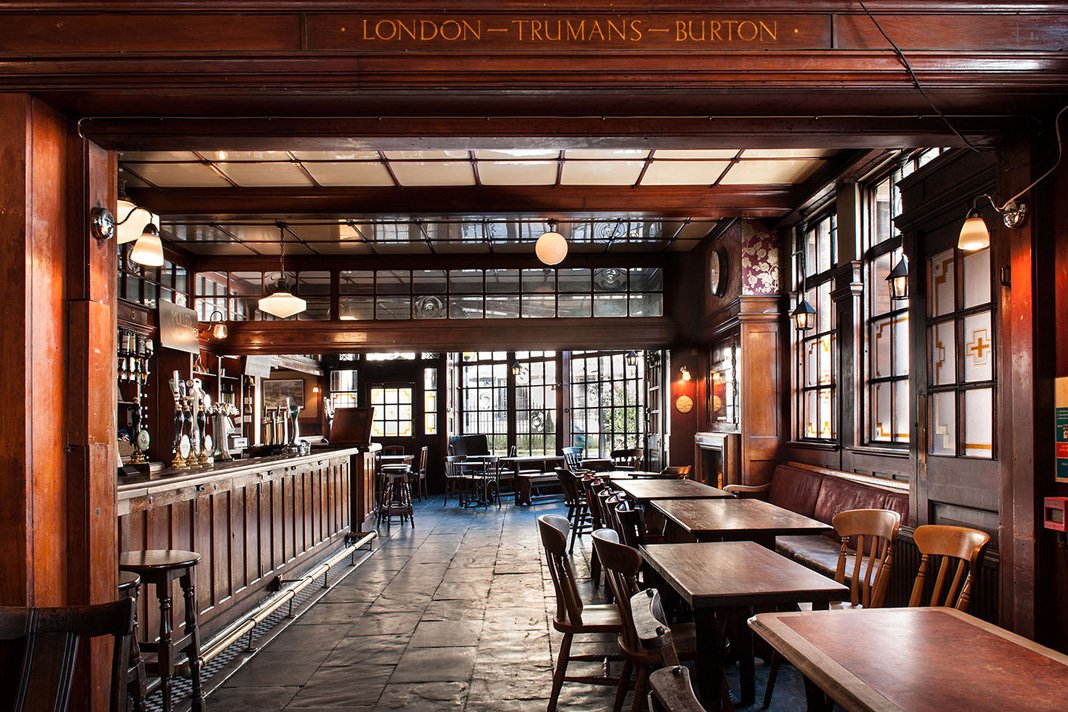
THOUGHT EXPERIMENTS IN PUBS
ST PANCRAS
SOLITUDE

1 ISOLATION
Isla hands in her phone and proceeds to the cell. She will be here for 20 days. She braces herself. She knows this is going to test her.
Over the course of the next 20 days, Isla goes through lots of feelings: despair, determination, fear, anger, uncertainty, regret, calm, clarity, conviction, and even elation.
By the time she leaves her cell and collects her phone, she feels like a different person. The experience was in some ways horrific, but she does feel like she has kind of evolved a bit now.
You meet her a few days later and she looks noticeably different, brighter and more peaceful. She says:
“The phrase: “What doesn’t kill you makes you stronger” kept going through my head, and I think it’s true. It was the hardest thing I’ve had to do, but I now feel a lot stronger. I’ve processed loads of stuff and had lots of realisations. I wouldn’t want to do it again, but I’m kind of glad I had the experience. I definitely wouldn’t recommend it to anyone, but I think most people would benefit from the experience if they were able to get through it.”
You research ‘isolation’ and read about people who have spent long periods of time in solitude. You come across people who have chosen to be alone in monastic retreats, and others who have endured years of involuntary solitary confinement. Many of them are considered to be very wise.
QUESTIONS TO CONSIDER:
How did you imagine this scenario at first: was Isla voluntarily going on a retreat? Or was she forced into solitary confinement?
If you assumed it was voluntary, do you think Isla would have still benefitted from this experience if it wasn’t voluntary?
If you had to face 20 days in isolation, in a small cell, how would you feel?
Are there any strategies you would use to get through this period of time?
How do you think the experience would affect you?
Would there be any benefits?
Would you ever choose to do this?
Is having a period of time alone ‘character building’?
How dangerous is it to spend time alone?
Do humans need some solitude?
SOURCE: BA, THOUGHT EXPERIMENTS IN PUBS Group Member
2 THE BEAR
Mike recently read a blog post about someone using the concept of a spirit animal to help him work out his personality.
He highlighted the following sentence:
“Unlike the popular personality tests that give you a sterile 4 letter code or some kind of clinical description only a psychologist would use, spirit animals are a fun way to think about what kind of person you are.” (Kang, 2024).
Mike thinks about it for a while and makes a shortlist of animals he thinks he might be:
Bear
Albatross
Elephant
These animals are all big, slow, and have long lifespans. Mike is 6’4” and 90 years old.
He researches these animals in order to narrow it down. He eliminates elephants because they live in herds. Mike lives alone and enjoys time by himself.
He likes the idea of albatrosses making long solitary migrations, spending months and even years alone flying over the ocean. He used to travel quite a bit, but nowadays, he spends most of his time in his local neighbourhood and at home, more like a bear.
He googles bears + solitude and reads:
“Bears are highly solitary creatures, often considered the most solitary carnivores, living alone for most of their lives to manage high food energy requirements and territory. They are territorial and, excluding mothers with cubs or mating pairs, typically avoid one another. Their solitary nature is a result of evolution and ecological needs, as they rely on vast, unshared foraging areas.”
Mike wonders whether he has ‘evolved’ to enjoy being alone or if it has been part of his personality all along. He’s always been content in his own company, but perhaps as his life went on, certain twists of fate meant that he leant into solitude rather than connection. He wonders if this is a good thing or not. Various people he’s known have criticised him for not trying to make connections with other people, but he’s always felt ok.
He finds the idea of himself as a bear comforting. Maybe he used to be an albatross, and maybe he could have been an elephant in another life, but now he is a bear.
He thinks there are a few other bears in the area, other solitary people who like being solitary. They sometimes catch each other’s eyes and smile at one another and that is enough. He feels fond of them because they are kindred spirits.
QUESTIONS TO CONSIDER:
If you could know other people’s chosen spirit animals upon meeting them, would you want to?
Can you think of a ‘Spirit Animal’ that fits your current personality? What about a short list of three?
The defining feature for Mike’s animal was its solitary nature, how important is your animal’s solitary/social nature?
Why do you think people have criticised Mike for not trying to make more connections in his life?
Mike wonders whether he evolved to be solitary or if it was always part of him, what do you think? Why might someone become more/less solitary in life?
Do you agree that ‘spirit animals’ are a fun way to think about what kind of person you are? Or do you prefer other ways of thinking about personality?
Mike lives in a city and has noticed other ‘bears’ in his neighbourhood. Can you live in a city and be around other people and still be considered ‘solitary’?
SOURCES:
BA, THOUGHT EXPERIMENTS IN PUBS Group Member
Kang, D. (2024). My life as an octopus: A generalist framework for a richer life. Substack. https://davekang.substack.com/p/my-life-as-an-octopus-a-generalist
3 BY YOURSELF
You’re in a second hand bookshop. Your eyes fall on the cover of a hardback. The image on the front depicts a dense forest on a mountainside. In a small clearing, there is a cabin. The title of the book is “A SIMPLER LIFE”.
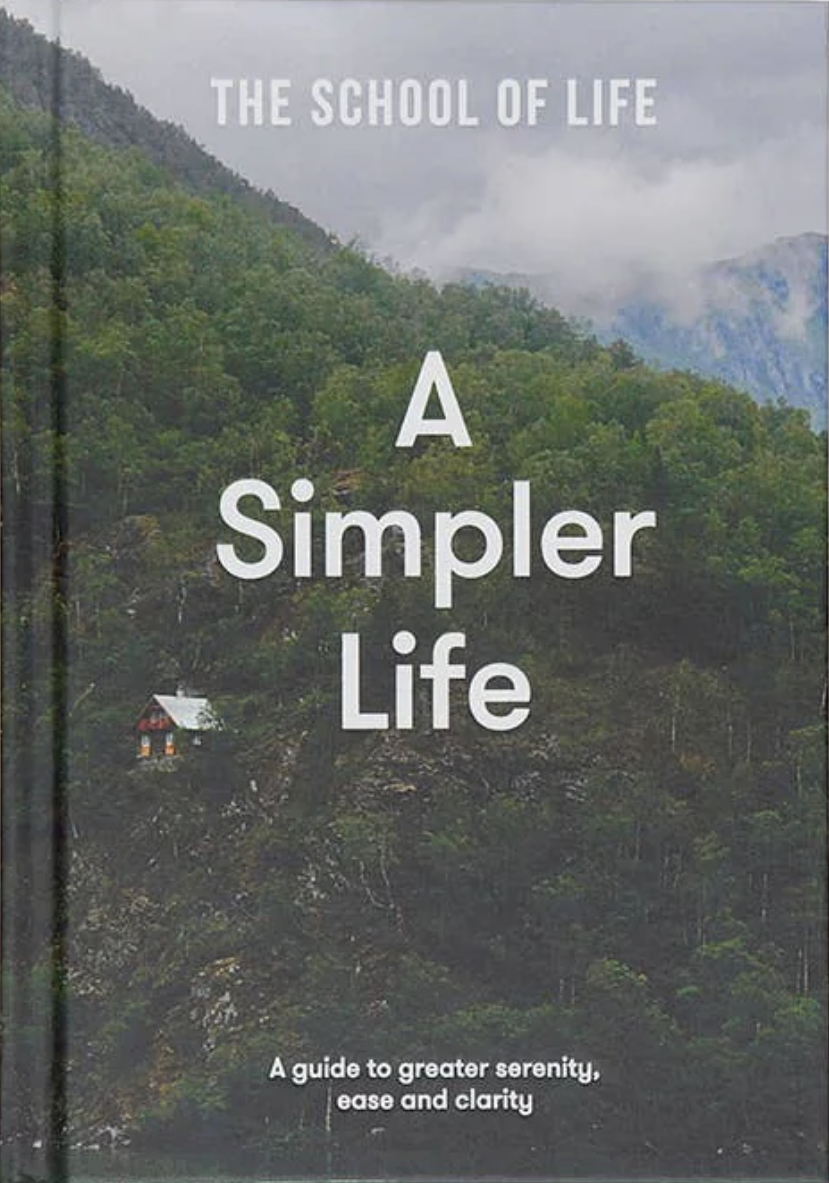
You pick it up and flick through.
On the title page, someone has scribbled:
“Give this to the most frazzled person you know, or buy it for yourself if you’re the most frazzled person you know. Peace and quiet is the key.”
Your friend, who is standing next to you notices you looking at the book and says:
“Oh my god, that picture on the front cover is creeeeeepy! I’d be so scared there. It looks like the kind of place a horror movie would start.”
A bystander in the bookshop says:
“The imagination is powerful when you’re on your own! Most children are scared by their imaginations. Adults grow out of it, mostly, unless they’re on their own. You have to be prepared if you’re going to spend time in a place like that. For me, the key is to never feed my imagination with scary images. Never go to horror movies.”
A week later, a friend of yours emails to say that they’ve finally finished renovating a little off grid cabin in the woods. They say:
“It’s SO peaceful and quiet. It’s definitely not luxurious in a conventional sense, the toilet is in an outhouse and the heating is a wood burning stove. But it is luxurious in the sense that you can completely get away from the hustle and bustle. You’re welcome to stay there anytime, just think of it as glorified camping!”
You think back to the scribbled inscription in that second hand book and wonder if being alone in your friend’s cabin might be what you need to feel less frazzled. But then you remember the conversation in the bookshop and wonder whether you’d feel scared alone in this cabin.
QUESTIONS TO CONSIDER:
Why do you think people sometimes feel more scared when they’re on their own?
Is the fear of being alone valuable?
Why is a cabin in the woods some people’s fantasy and others’ nightmare?
Would you feel tempted to visit, to be less ‘frazzled’?
Do you think you’d feel scared if you were there by yourself? Would it be different if you were with someone else?
If you think you would feel scared, how would you cope if you had to spend a night there?
How might someone go about overcoming this fear if they wanted to?
If you had to stay there for a month, do you think the fear of being alone would get easier or worse with time?
What is fear?
SOURCES:
BA, THOUGHT EXPERIMENTS IN PUBS Group Member
The School of Life. (2022). A simpler life: A guide to greater serenity, ease, and clarity. The School of Life Press. https://www.theschooloflife.com/shop/a-simpler-life/
Lets be friends on Instagram: @thoughtexperimentsinpubs
Our newsletter (and more):
FEEDBACK
(Messages are anonymous unless you include your name/contact details)
Help me to write more THOUGHT EXPERIMENTS and arrange more meetups by…
Thank you, your support means a lot :-)